


Autism
 KIDS for Families

 On this page:
We know that there are natural differences between human brains. This is known as neurodiversity. Some human brains have more in common and we can group them together. Most brains are in the neurotypical group and others are neurodivergent. One type of neurodivergence or neurotype is autism. There is a lot of overlap between the different neurotypes, and they often occur together. It is important to understand your own, or your child or young person’s brain. Everybody has individual strengths and challenges and may need different supports.
What is autism?
Autism is a lifelong neurodevelopmental difference or neurodivergence. Autistic people are all different and will have a unique experience, strengths and challenges. Autistic people communicate, think and process sensory information differently. Autistic people can be any gender.
The following videos explain autism.
Amazing Things Happen Video by Alexander Amelines
What is Autism? Video from National Autistic Society
Different Minds. One Scotland. Video from Scottish Government
For more information look at:
- Autism from NHS Inform
- What is autism? from The National Autistic Society
- About autism from Scottish Autism
Strengths and Challenges
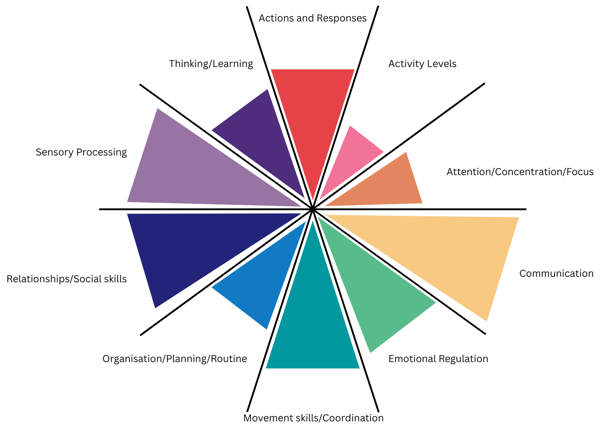
Everyone has strengths and challenges and this is the same for neurodivergent people. The neurodivergent wheel helps us to understand a neurodivergent individual’s experiences, strengths and challenges at any given time or place. Neurodivergent people thrive in the right environment with the right supports. The wheel can help to build empathy and understanding. It also helps to make sure that the right support is given at the right time.
This is an example of an individual's profile. It shows the spectrum of differences. Remember a person's profile can vary over time and in different environments.

For more information look at Understanding the Spectrum - a comic strip explanation from The Art of Autism.
Communication
 Autistic people often have different communication styles and preferences. Language may develop differently. This can range from non-speaking and not using language to using conversation. Some autistic people learn language in chunks rather than one single word at a time. You might notice an autistic person copying phrases or entire scripts of language that they have heard from the TV or books. Some autistic people speak with an accent and use vocabulary like gas station instead of garage.
Some autistic people repeat sounds, words or phrases. This is called echolalia. This could be a phrase they've just heard, a line from a favourite film or repeatedly pressing a button on a device that makes a certain sound. This can be used to communicate different things depending on the situation, for example to agree, refuse, comment or have fun.
How an autistic person responds to your communication might vary, especially if they are stressed. Sometimes, they might not respond to what you've said for a number of reasons including not knowing what's expected, feeling overwhelmed or not having understood. At other times they may respond using their preferred communication style.
Autistic people often use direct language and have a literal understanding. This straightforward way of communicating means autistic people say what they mean. However, sometimes this can be misinterpreted as rude by others. It’s helpful to try and communicate with autistic people by saying exactly what you mean to avoid misunderstanding.
Autistic people can have differences in non-verbal communication. Eye contact might not be a natural part of an autistic person’s communication style. Autistic people may also use gesture, facial expression and/or tone of voice differently. People should focus on what someone has said rather than how they look or sound when they say it to avoid misunderstanding.
Many autistic people can be loyal and dependable friends, who may prefer to have a small number of meaningful connections. Social situations can be overwhelming for autistic people. This can be for a number of reasons including people being unpredictable, sensory demands and having to work harder to follow what people mean. Autistic people might need more time to recharge their batteries after social interactions.
Thinking
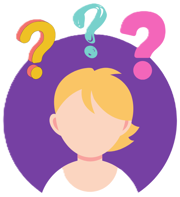 Autistic people are often passionate about their interests and can be extremely motivated and highly focused on learning, talking about, and engaging in their interests. Some autistic people can find it hard to be motivated to engage in topics they find less interesting or don’t see the purpose of.
Autistic people can be logical in their thinking about the world and can be good at noticing small details. They may prefer specific and factual information. Autistic people might see things as black and white without noticing or understanding middle ground or different perspectives. Focussing on the detail can sometimes lead autistic people to miss the main point.
Many autistic people have a strong sense of fairness and justice, preferring to follow the rules and expecting others to do so too. This can cause distress and difficulties in relationships when rules are interpreted or applied differently.
Autistic people have a strong need for predictability and sameness. Routines and predictable responses from others can provide a sense of comfort and control. When routines are followed, it can be easier to learn and enjoy activities. Changes that seem small to other people can be difficult for autistic people. Unexpected events and changes can cause distress. Autistic people can have difficulties with thinking through the sequence of actions and what the consequence or outcome might be.
Sensory processing
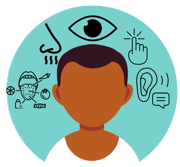 The way we get information from our senses and what our brains do with it is called sensory processing. Autistic people often process sensory information differently. Some autistic people find joy through their heightened sensory experiences. This can lead them to develop particular skills in an area of interest.
Due to sensory differences autistic people sometimes move their bodies in different ways. For example, toe walking, hand flapping or spinning. Autistic people sometimes use repetitive sensory experiences to help regulate their sensory system and emotions. This is sometimes called stimming.
Sometimes, autistic people need to use lots of mental and physical energy to notice or tolerate the sensations involved in doing everyday activities. Some autistic people might be overwhelmed by sensory experiences, including noise, touch or smell and they may try to avoid them.
Emotions
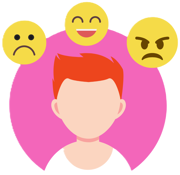 Autistic people can experience emotions differently. Many autistic people experience joy, excitement and passion intensely. This can be inspiring and motivating for others. Some autistic people can find it difficult to identify and understand different emotions in themselves and other people. Some feel their own and others' emotions deeply and may find it hard to separate others' emotions from their own.
Living in a neurotypical world can be demanding, exhausting and result in high levels of stress. This can lead to intense overwhelm. The overwhelm can result in a ‘meltdown’ or if someone internalises their emotions they may withdraw or ‘shutdown’.
What you can do to help
Communication and Social Interaction
Autistic people see the world and process information in a specific way. This includes how communication and interaction are experienced and used. When communicating it can be helpful to use a neuro-affirming communication style. Focus on:
- valuing all communication and respecting individual differences and preferences
- understanding that communication breakdowns are mutual and that we all need to work together to find a solution
- adapting your communication to match the autistic child or young person's developmental communication stage
- giving extra processing and responding time
- creating positive communication opportunities where the autistic child or young person can be their true self.
There is information about autism and communication on the National Autistic Society website that helps you understand autistic communication and what support might be helpful. Reframing Autism describes the different ways that autistic children and young people socialise and communicate.
Visual Supports
Spoken words alone can be difficult to understand and remember. Making information visual by using objects, photos, pictures, symbols and/or written words makes communication physical and consistent.
These kinds of visual supports can therefore help to:
- provide predictability and routine
- encourage independence
- build confidence
- improve understanding
- avoid frustration and anxiety
- provide opportunities to interact with others.
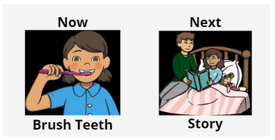
Examples include visual timetables, now & next sequences, visual schedules/ ‘jobstrips’, choosing boards. The National Autism Implementation Team have a Visual Support Project where you can download a variety of visual supports for home, school and the community.
Neuro-affirming Social Stories
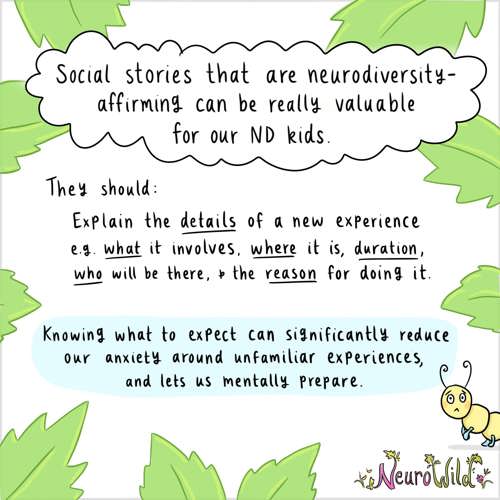
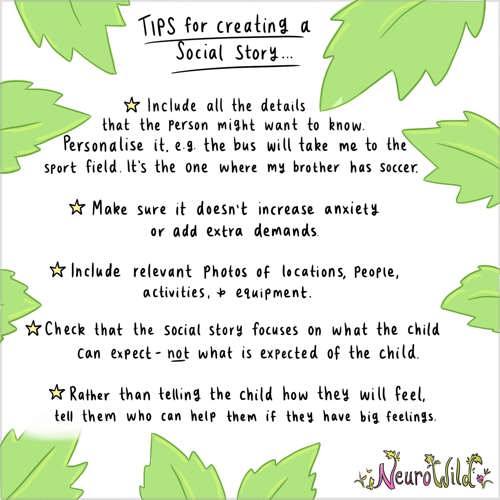
Social stories are simple stories that can help to prepare neurodivergent children and young people for new or difficult events. To be helpful the stories need to include:
- Information about what your child/young person can expect to happen.
- Personalise it
- Include answers to the questions your child/young person might ask
- Include photos of environments, people and activities.
- What options your child/young person has:
- Include any accommodations they can use or request
- Include who can help them if they have big feelings or are overwhelmed in the situation.
For more information look at:
Thinking
It can be helpful to develop and maintain a routine that provides structure. This can be particularly helpful with activities that the child or young person needs to do but finds challenging, for example brushing their teeth, meal times, bed time.
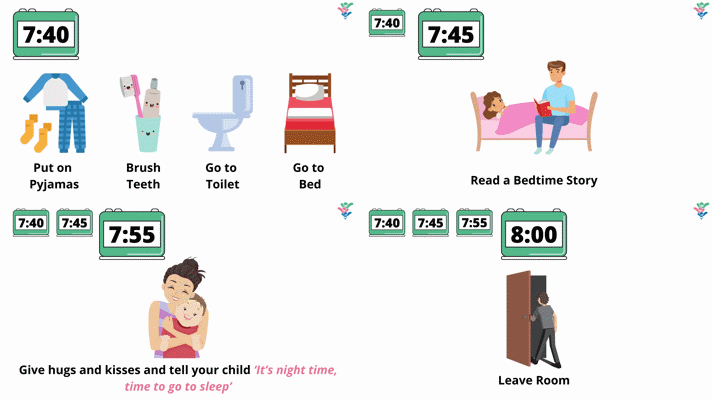
Prepare your child or young person for any changes ahead of time. You might want to visit a new location in advance and practice how to get there. Involve your child or young person in making decisions around any planned changes.
For more information look at
- Preference for order, predictability or routine from the National Autistic Society
- Our routines page.
It can also be helpful to break tasks down into small chunks and focus on completing one step at a time. Make sure to give extra thinking time as well as extra time to complete tasks. Visual tools to help with completing tasks in the right order might be helpful too. You could try using visual sequences or checklists.
Sensory processing
Autistic people often process everyday sensory information and experiences differently. It can be helpful to:
- Provide opportunities for your child or young person to take part in sensory activities that they like or find soothing throughout their day.
- Provide opportunities to explore new sensory activities together, keep it fun. Your child or young person doesn’t have to take part if they don't want to, you can try another activity or try again at another time.
- Think about and adapt the sensory environment or activity. This might include reducing demands or identifying accommodations that your child or young person can request or have unlimited access to.
The I'm concerned about Sensory Processing page contains resources to help you understand sensory processing and how to support your child or young person. All this information can help you to support your child or young person to take part in everyday life.
For more information look at Autism and sensory processing from the National Autistic Society.
Emotions
To support autistic children and young people with their emotions focus on creating a safe environment. Do this by:
 providing predictability by having a regular routine and doing things the same way every time.
- reducing pressure. Everyone can feel pressure from the things they are asked to do, the environment that they are in, the often unspoken expectations placed of them to act certain ways or the pressure they put on themselves or their experiences. There are dress code expectations, eating and drinking social ‘norms’ along with attitudes and mannerisms that make society difficult to navigate for autistic people. Think about what you can change or do.
- naming emotions and making sure the autistic person knows what they are feeling is ok.
- adapting your communication. Use simple direct language and visual supports.
- prioritising sensory needs. Make sure that the autistic person is comfortable and can access any sensory experiences that help.
Work with your child or young person to identify unique triggers and develop personalised calming strategies.
For more information look at our Emotional Development page.
Local and National Resources
- Ambitious About Autism provide support and advice around autism for families.
- DIFFERabled offer a range of services and support to improve the overall wellbeing of our neurodivergent community and their families.
- The National Autistic Society provides resources for families and young people including Post diagnostic support – a guide for parents and carers. They also have specific services and information for those who live in Scotland.
- The Scottish Autism website is full of useful resources for parents and carers as well as autistic young people and adults. Right Click is an online training programme for parents or carers of autistic children and young people. The Scottish Autism Advice Line is open Tuesday to Friday (10am to 4pm). It provides support for individuals, families and professionals. Advisors are available to take calls 01259 222022 or live chat.
- Reframing Autism provide education resources and research underpinned by their lived experience.
- Not an Autism mom book list provides information about lots of helpful books for parents and young people, prioritising those written by autistic people.