

 KIDS for Families

 Every child grows and develops in their own time. If you are worried about your child's development then speak to your Health Visitor, Family Nurse or GP.
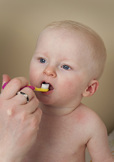
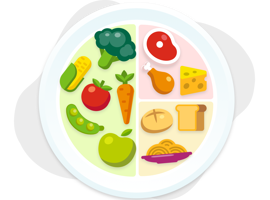 Food comes in all colours, shapes, and sizes. This is the time to let your baby explore them all! It is important that you offer your baby a wide variety of textures, flavours, and a rainbow of colours. Babies should be offered the same foods as the rest of the family.
You should continue to avoid salty and sugary foods and honey. Pasteurised cow’s milk and unsweetened non-dairy alternatives (avoid rice milk until your child is 4 ½ years old) can be used with cereal or in food but not as a main drink until 12 months of age.
Move on from mashed to lumpy foods, and from lumpy to well chopped foods. Continue to offer finger foods cut into batons like vegetables, fruit, cheese, well cooked chicken breast/fish/eggs or bread/toast.
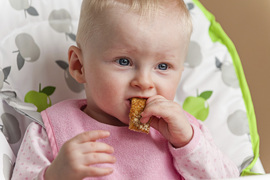 It is normal for a baby to gag while they are learning to eat a new food or explore a new taste or texture. It is important to avoid offering only smooth foods for too long as this can lead to babies refusing lumps.
Most babies will be moving on from two to three meals a day by this stage. Your baby will guide you on how much they need to eat. It is normal for their intake to vary day-to-day.
Your baby’s usual milk should still be the biggest part of their fluid intake. You should offer tap water in a free-flow or open cup with meals.
For more information look at
- Fun First Foods booklet - this leaflet is available in other languages and in audio format.
- First Steps Nutrition Trust Infant milk information for parents and carers
- NHSGGC Early Years Starting Solids
- NHSGGC Happy Healthy Tots: Feeding your baby or child
- British Dietetics Association Complementary Feeding (Weaning) fact sheet
If you have any questions then please speak to your Health Visitor or Family Nurse.