Self Care Self Care |
|
For wear and tear, minor trips and everything in between.
Self-care
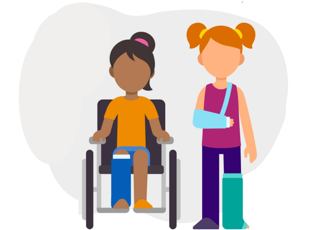
You can treat your child's very minor illnesses and injuries at home.
Some illnesses can be treated in your own home with support and advice from the services listed when needed. Use the medicines recommended by your pharmacist or doctor. Make sure your child gets plenty of rest.
|
Sound advice
Children can recover from illness quickly but also can become more poorly quickly; it is important to seek further advice if a child's condition gets worse.
More information on common childhood injuries
Information on preventing accidents and injuries
|
 Local Pharmacist Local Pharmacist |
|
Pharmacists are experts in many aspects of healthcare. They are the first port of call for minor ailments and can provide advice and medication (if needed) for a wide range of long term conditions and common ailments including coughs and colds.
Pharmacy First is a free service. You do not need an appointment and many pharmacies have a private consultation area.
Your pharmacist will let you know if you need further medical attention.
|
Sound advice
- Visit a pharmacy if your child is ill, but does not need to see a GP.
- Remember that if your child's condition gets worse, you should get further medical advice immediately.
- Help your child to understand - watch this video with them about going to the pharmacy.
|
 GP (General Practitioner) GP (General Practitioner) |
| GPs assess, treat and manage a whole range of health problems. They also provide health education, give vaccinations and carry out simple surgical procedures. Your GP will arrange a referral to a hospital specialist should you need it. |
Sound advice
You have a choice of service:
- Doctors/GPs can treat many illnesses that do not warrant a visit to the Emergency Department.
- For minor injuries such as cuts that need stitches, broken bones, sprains and minor burns in children aged 5 or over, go to one of our Minor Injury Units (MIU).
|
 NHS 24 NHS 24 |
If your child does not have a life or limb threatening injury, consider calling NHS 24 on 111.
You may be allocated a virtual appointment on the same day with a doctor or nurse practitioner at our Flow Navigation Hub. This may avoid the need to travel to hospital.
If after talking to you and your child, they feel you do need to be seen at an Emergency Department or Minor Injury Unit they will direct you to your nearest one. |
Sound advice
Use NHS 24 if you are unsure what to do next, have any questions about a condition or treatment or require information about local health services.
|
 Emergency Department Emergency Department |
| Emergency departments provide vital care for life-threatening emergencies, such as loss of consciousness, suspected heart attacks, breathing difficulties, or severe bleeding that cannot be stopped. If you’re not sure it’s an emergency, call NHS 111 for advice. |
Sound advice
- Many visits to the Emergency Department and calls to 999 could be resolved by any other NHS services.
- If your child's condition is not critical, choose another service to get them the best possible treatment.
- Help your child to understand – watch this video with them about going to the Emergency Department or riding in an ambulance
|
Content adapted with permission from the what0-18.nhs.uk resource produced by the Healthier Together initiative



 Royal Hospital for Children for Patients, Carers & Visitors