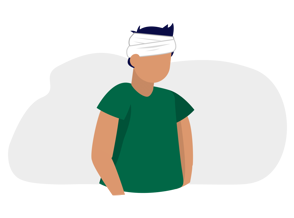
Following a head injury an adult should supervise your child for the next 24 hours. They should also receive regular pain relief (for example, Paracetamol). If you are concerned that they are developing a problem, please telephone this Emergency Department and, if necessary, bring them back to hospital.
Emergency Department, Royal Hospital for Children
1345 Govan Road, G51 4TF
Telephone: Majors Department: 0141 452 4055
The signs that you should look out for are:
- If your child becomes unusually sleepy or is hard to wake up
- Headache all the time, which painkillers don’t help.
- Repeated vomiting
- Weakness of arms or legs, e.g. unable to hold things
- Difficulty in seeing, walking, or acts clumsy and uncoordinated.
- Confusion (not knowing where they are, getting things muddled up).
- Fluid or blood coming from ear or nose.
- Seizures
- Any other abnormal behaviour.
Allow your child to sleep as normal. We would encourage you to check on them a couple of times overnight to check:
- Do they appear to be breathing normally?
- Are they sleeping in a normal posture?
- Do they make the expected response when you rouse them gently? (E.g. pulling up sheets, cuddling teddy-bear)
- If you cannot satisfy yourself that your child is sleeping normally, then waken them fully to check.
If you have any concerns about any of the above please contact the Emergency Department.
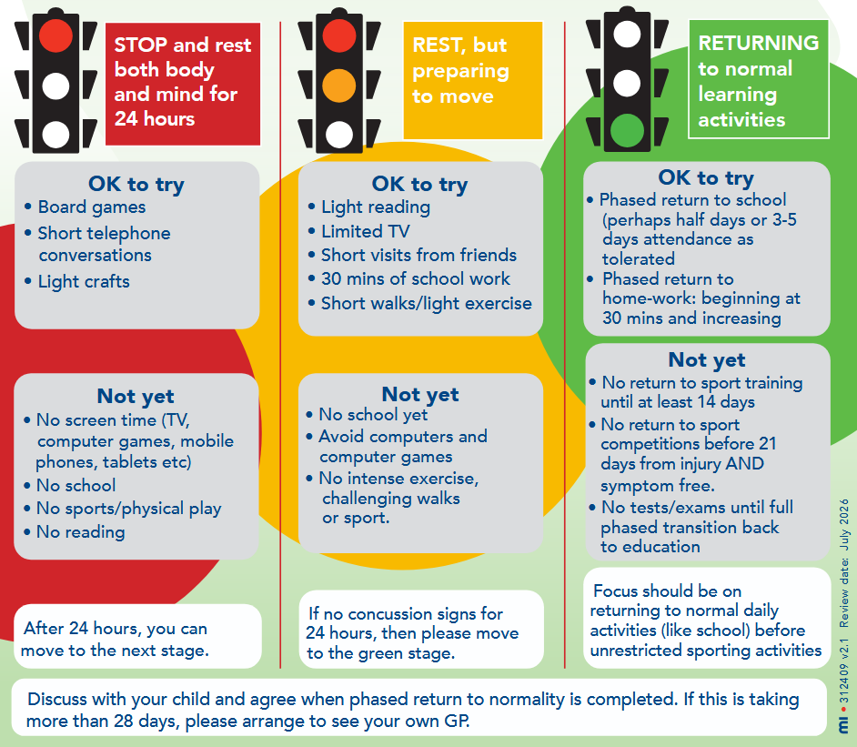
The vast majority of children who receive this advice leaflet will not develop signs of concussion. However, if signs of concussion are apparent after the first 24 hours, please use the guidance above.
For further advice, information and support around Childhood Acquired Brain Injury, please also contact the Child Brain Injury Trust online at childbraininjurytrust.org.uk or via email: info@cbituk.org



 Royal Hospital for Children for Patients, Carers & Visitors

 Remember to bookmark this page so that you can find it later.